
十二月 08, 2020
Industrial production processes can generate different types and concentrations of dust. Selecting the right dust collector is therefore important for achieving effective dust capture, reliable filtration, stable operation, and reasonable long-term maintenance costs.
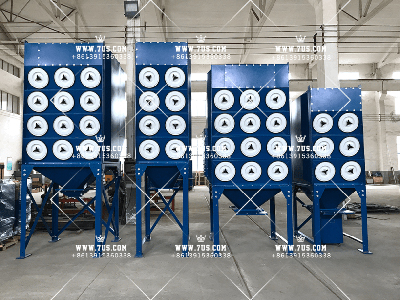
There is no single dust collector suitable for every industrial application. Cartridge dust collectors, baghouse dust collectors, and wet dust collectors each have different characteristics. Before purchasing equipment, the actual operating conditions should be evaluated carefully.
1. Identify the Dust Characteristics
The type of dust is one of the most important factors in equipment selection. Particle size, dust concentration, temperature, moisture or oil content, abrasiveness, and combustibility can all influence the choice of dust collector and filter media.
2. Determine the Required Airflow
Dust collectors should be selected according to the airflow required by the application. The required airflow depends on the production process, dust generation conditions, capture method, and other system parameters. Equipment that is too small may not provide sufficient capacity, while unnecessary oversizing can increase equipment and operating costs.
3. Select the Appropriate Filtration Technology
Cartridge dust collectors are commonly used for fine and dry industrial dust where compact equipment and a large filtration area are required. Baghouse dust collectors are widely used for applications with higher dust loading and can accommodate different filter media for various operating conditions.
For applications involving certain combustible metal dusts, oily particles, or other conditions where dry filtration may not be appropriate, a wet dust collector can also be considered after evaluating the specific process and safety requirements.
You can view our vertical cartridge dust collector for dry industrial dust collection applications.
4. Consider Operating Temperature and Filter Media
Operating temperature has a direct influence on filter media selection. Polyester and other commonly used filter materials are suitable for many general industrial applications, while higher-temperature or chemically demanding conditions may require specialized filter media such as aramid, PPS, or other suitable materials.
5. Evaluate Filter Cleaning and Maintenance
Reliable filter cleaning helps maintain stable pressure drop and airflow during operation. Pulse-jet cleaning is commonly used for cartridge and baghouse dust collectors. Buyers should also consider filter replacement access, dust discharge components, inspection points, and routine maintenance requirements.
6. Evaluate Safety Requirements
If the collected dust is combustible, the potential dust explosion risk should be evaluated before equipment selection. Applicable explosion protection requirements and local regulations should be considered according to the specific application and installation location.
7. Compare Total Operating Cost, Not Only Purchase Price
Equipment price is only one part of the purchasing decision. Filter service life, pressure drop, energy consumption, compressed air consumption, replacement parts, maintenance access, and equipment reliability can all affect the long-term operating cost of a dust collection system.
Choose Equipment According to the Actual Application
Before requesting a quotation, providing clear technical information can help the manufacturer select a more suitable equipment configuration. Useful information includes required airflow, dust type, operating temperature, moisture or oil content, installation environment, electrical supply, and any special safety requirements.
Jiangsu Erhuan Environmental Technology Co., Ltd. manufactures industrial dust collection equipment and filtration products under the 7US brand for international markets. Our product range includes cartridge dust collectors, baghouse dust collectors, wet dust collectors, industrial filter cartridges, and related filtration components.
OEM and private-label manufacturing services are available for overseas distributors, engineering companies, system integrators, and equipment manufacturers.
 Products
 Industries
 OEM/ODM
 News
News About us
 Contact