
十二月 08, 2020
A water film dust collector is a type of wet dust collector that uses water or another suitable scrubbing liquid to contact dust-laden air. During wet scrubbing, dust particles become wetted and are transferred from the airstream into the liquid, allowing the collected material to settle or discharge as slurry.
Water film dust collectors are often discussed as wet scrubbers or wet dust collection systems. The appropriate equipment should be selected according to the dust properties, operating temperature, moisture, airflow, wastewater handling requirements and project conditions.
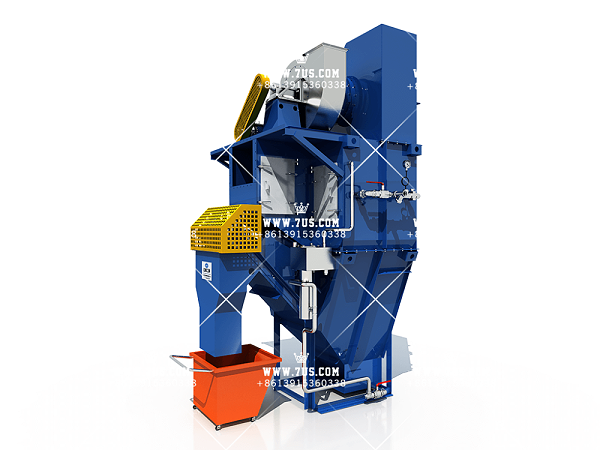
Dust-laden air enters the wet collector and passes through a liquid-contact zone. Water droplets, a water film or turbulent water waves create contact between the particles and the scrubbing liquid. The collected particles are then carried into the water tank, while the treated air passes through internal mist-elimination components before discharge.
In an EHWD self-induced wet dust collector, high-velocity airflow is used to generate turbulent water waves for primary dust capture. This design does not require a water pump or spray nozzles for the main scrubbing process.
Water film dust collectors can be considered for selected industrial applications involving hot, humid, oily, sticky or high-dust-loading exhaust air. Wet collection may also be considered where dry filter media could become blocked or require frequent replacement.
The final selection depends on the actual collected material. Some dusts may react with water, create corrosion concerns or require specific wastewater treatment arrangements. These factors should be evaluated before a wet dust collector is selected.
Collected dust is transferred into the scrubbing water and discharged as sludge or slurry. The system may use recirculating water, controlled make-up water and a suitable sludge-discharge arrangement according to the dust load and operating schedule.
Where required, external solid-liquid separation equipment can be used to treat slurry, recover solids and return clarified water for reuse. The treatment method should be determined by the collected dust properties and site conditions.
Before selecting a water film wet dust collector, confirm the dust type, airflow, temperature, moisture content, possible corrosion, sludge characteristics and local environmental requirements.
For dust with combustible, corrosive or water-reactive properties, any additional safeguards should be determined according to the actual process and project requirements.
 Products
 Industries
 OEM/ODM
 News
News About us
 Contact