Nomex Filter Cartridge High-temperature pleated filter media
-
-
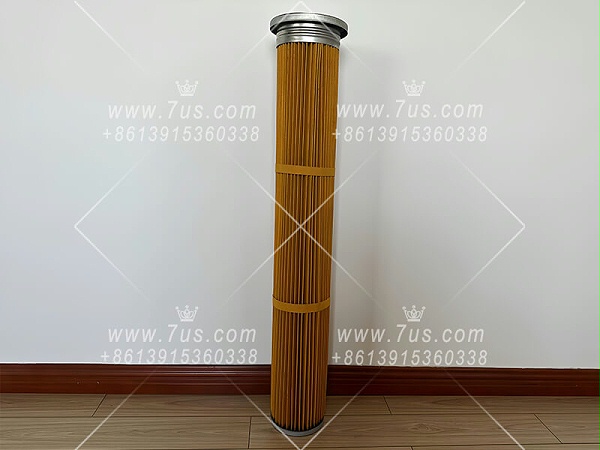
Nomex non-woven filter media, also known as meta-aramid filter media, is designed for high-temperature dust filtration. It can withstand operating temperatures of approximately 200–220°C under suitable working conditions.
Through a specialized heat-setting and curing process, the soft non-woven material is converted into a rigid, pleatable filter medium suitable for manufacturing industrial air filter cartridges.
Nomex filter cartridges retain the high-temperature resistance of conventional Nomex filter bags. Their pleated structure provides a larger filtration area within a compact space, helping reduce equipment size.
Nomex filter media is commonly used in smelting, chemical processing, building-material production, thermal power generation, waste incineration, coal-fired boilers and other demanding high-temperature applications.
Select by External Design Tell us the item number you require
-
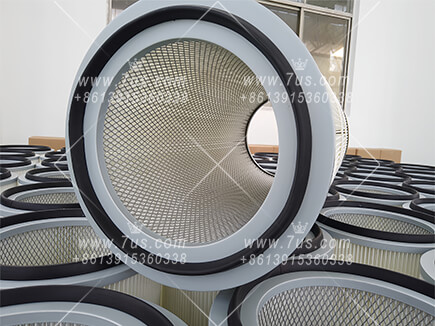
1.1 Art. No. EHFIL001
-
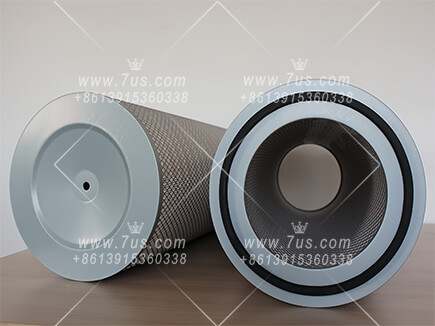
1.2 Art. No. EHFIL002
-
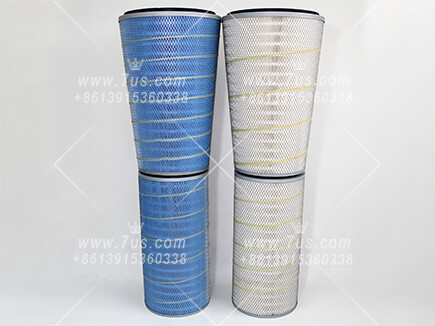
1.3 Art. No. EHFIL003
-
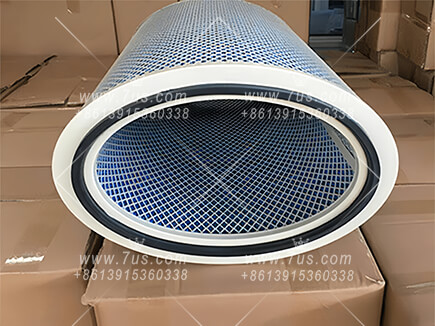
1.4 Art. No. EHFIL004
-
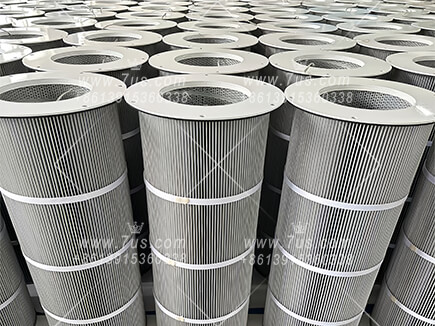
1.5 Art. No. EHFIL005
-
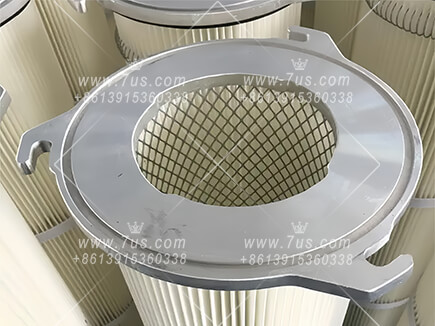
1.6 Art. No. EHFIL006
-
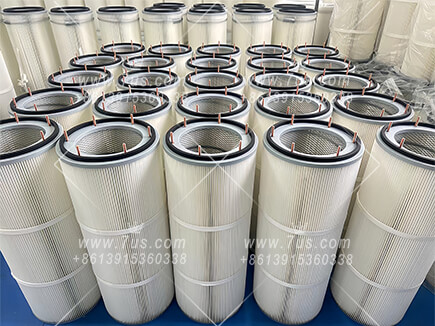
1.7 Art. No. EHFIL007
-

1.8 Art. No. EHFIL008
-
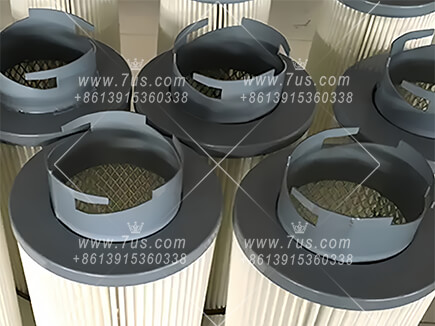
1.9 Art. No. EHFIL009
-
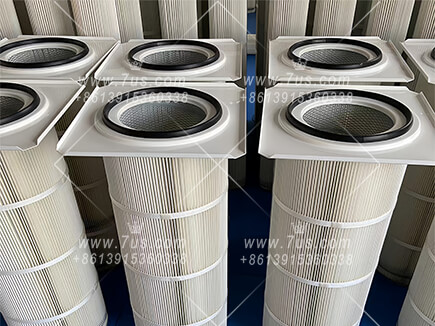
1.10 Art. No. EHFIL010
-
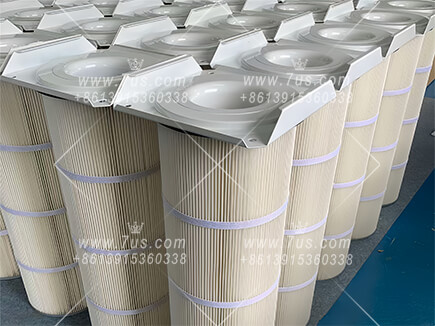
1.11 Art. No. EHFIL011
-
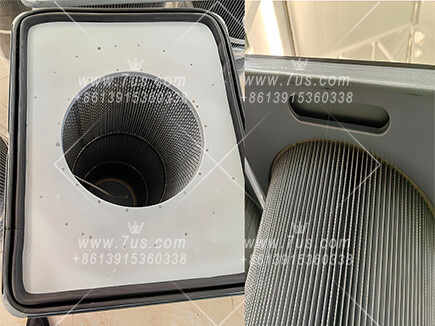
1.12 Art. No. EHFIL012
-
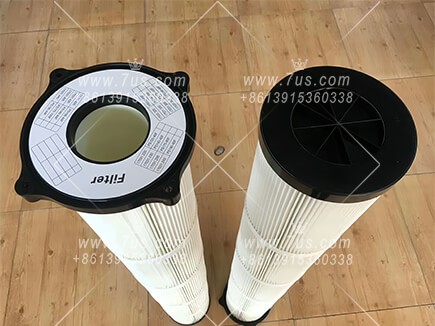
1.13 Art. No. EHFIL013
-
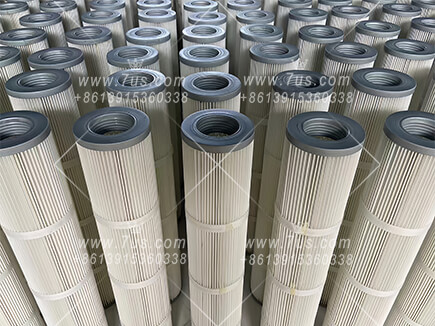
1.14 Art. No. EHFIL014
-
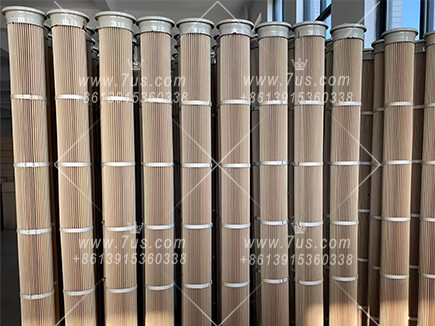
1.15 Art. No. EHFIL015
-
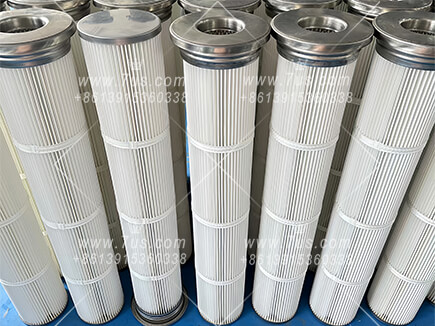
1.16 Art. No. EHFIL016
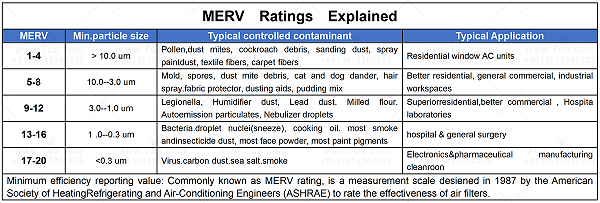
International Standards Comparison

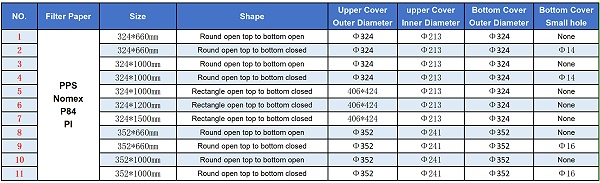
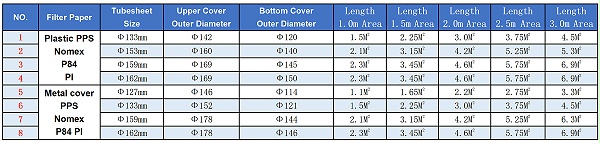
Common Specification Selection Guide
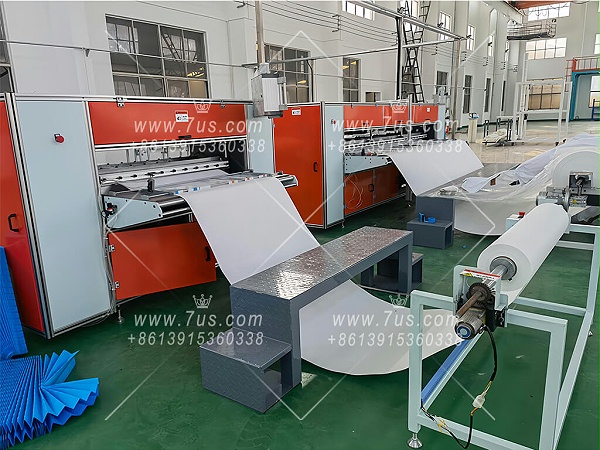
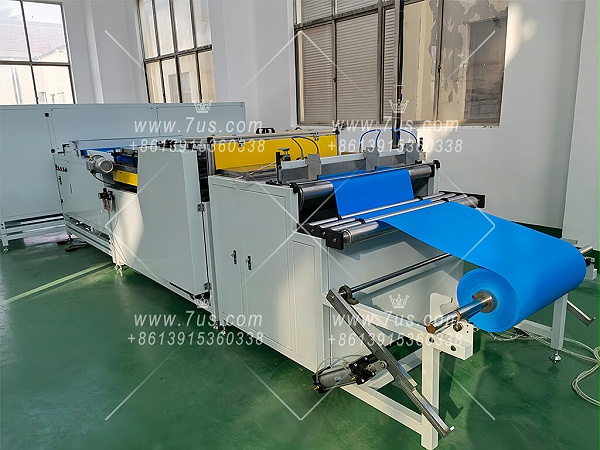
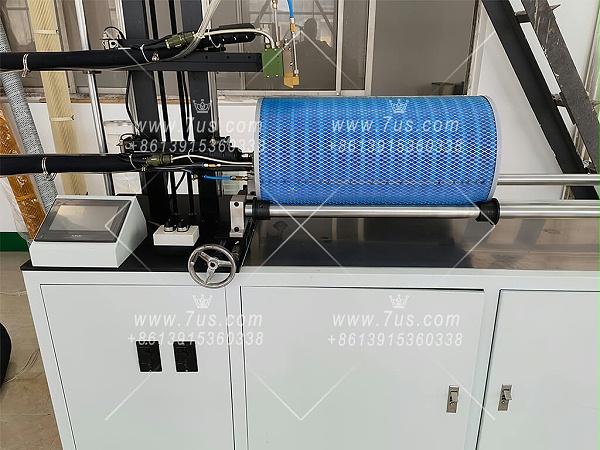
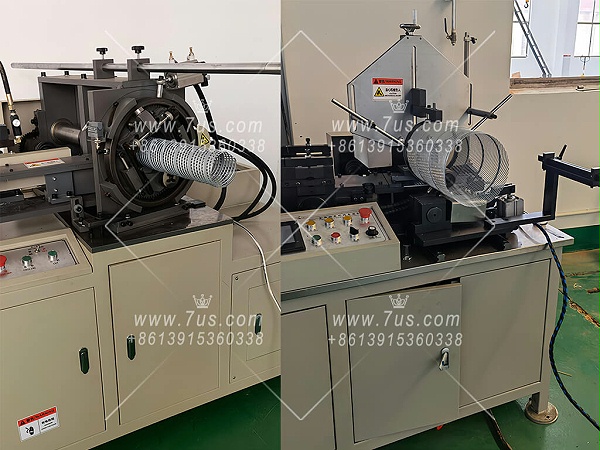
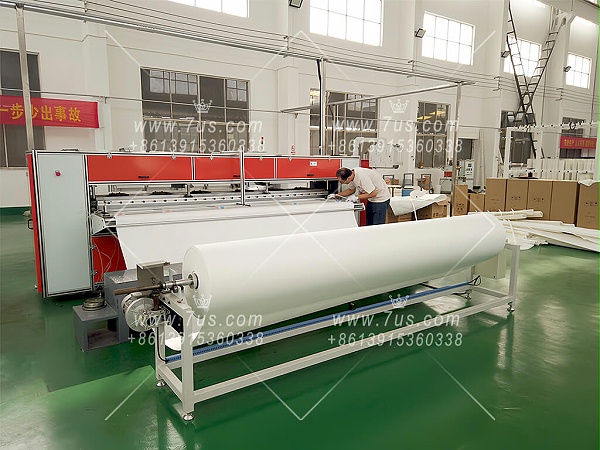
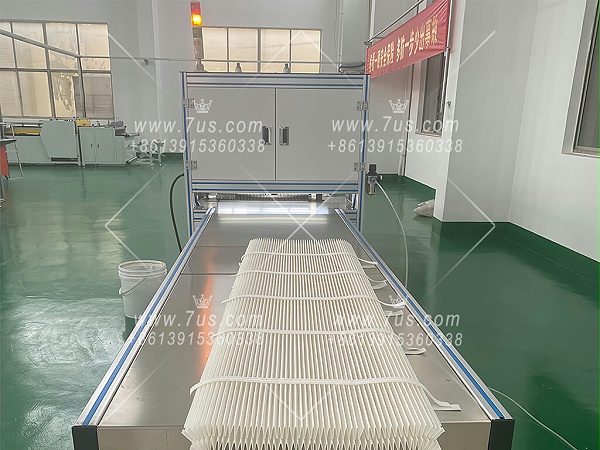
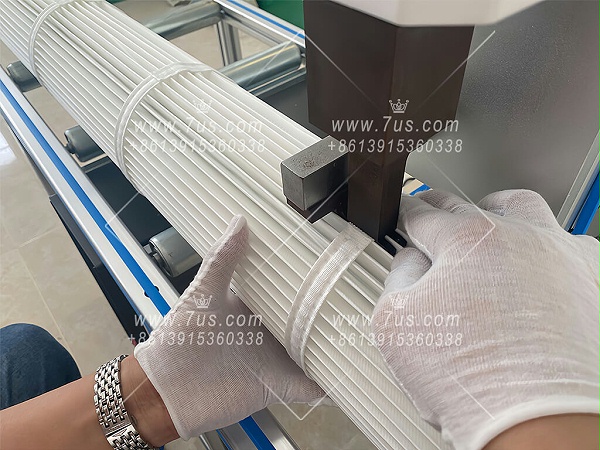
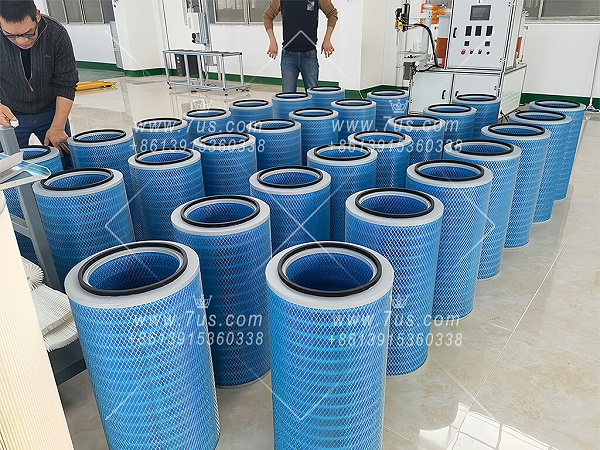
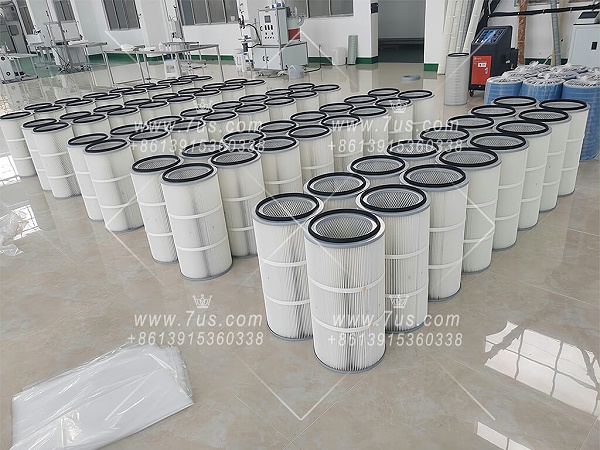
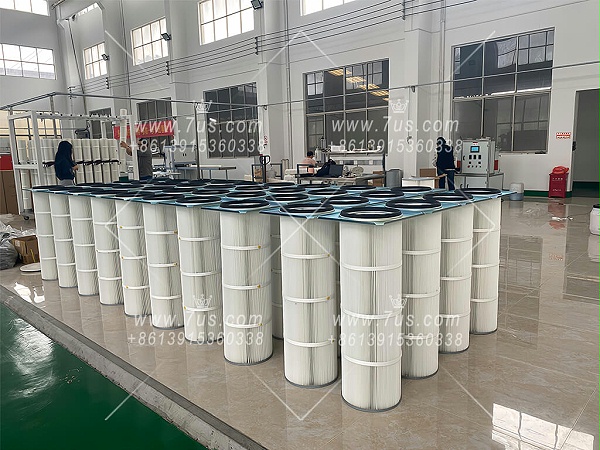
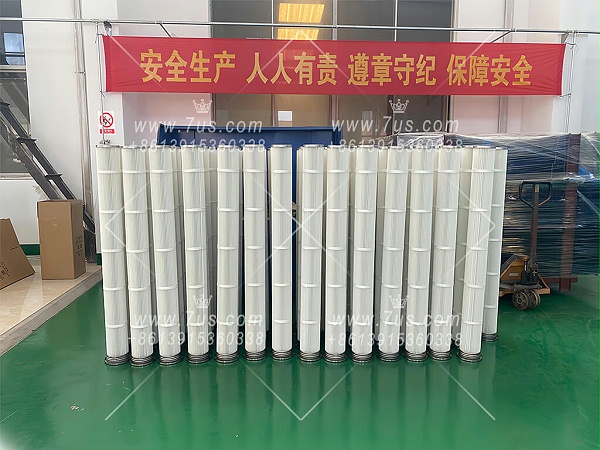
Our Filter Cartridge Factory Filter cartridge manufacturing equipment and processes
Frequently Asked Questions Common questions about industrial filter cartridges
1.1 What is a filter cartridge?
A filter cartridge, also called a filter element, is a replaceable component installed inside a dust collector. It captures airborne particulate matter and separates dust from the airflow. Industrial air-intake filter cartridges are also used as prefilters
for gas turbines, blowers and air-compressor stations.
1.2 Are filter cartridges better than filter bags?
Filter cartridges provide a large filtration area within a compact volume because of their pleated construction. Whether a filter cartridge or a filter bag is more suitable depends on the dust characteristics, concentration, temperature, moisture content
and operating conditions. For high dust concentrations, a cyclone or another pre-separation device may be required before the cartridge dust collector.
Replacing conventional filter bags with long pleated filter cartridges can increase the available filtration area, reduce the air-to-cloth ratio and save equipment space. The final emission performance depends on the filter media, dust characteristics,
equipment design and operating conditions.
1.3 How is dust removed from a filter cartridge?
Industrial filter cartridges are commonly cleaned using compressed-air pulse-jet cleaning. Compressed air, typically at 4 bar or higher, is released through a pulse valve into the cartridge. The resulting pressure wave causes the filter media to flex
and helps dislodge accumulated dust from its surface, reducing differential pressure and restoring airflow.
1.4 What filter cartridge sizes are available?
Common filter cartridge sizes include Ø350 × 660 mm, Ø324 × 660 mm and Ø324 × 1,000 mm. We can also manufacture filter cartridges in other diameters, lengths and connection designs for replacing conventional filter bags. Depending on the filter media
and production requirements, customized cartridges up to approximately 3 meters long are available.
1.5 What filter cartridge shapes are available?
Available designs include cylindrical, conical and long bag-replacement filter cartridges. Replacement cartridges can also be manufactured according to the customer’s drawings, dimensions or physical samples.
1.6 What installation methods are available?
Available installation methods include horizontal insertion, inclined insertion, chuck-and-rod mounting, threaded-rod mounting, three-lug mounting, top installation, bottom installation and side installation. The connection design can be customized to
match the customer’s dust collector.
Filter Media Options
2.1 What filter media are available?
Common filter cartridge media include cellulose filter paper and polyester (PET) spunbond non-woven media. High-temperature pleatable media, including fiberglass, PPS, P84 and Nomex, are also available for suitable operating conditions.
2.2 What is a cellulose filter cartridge?
A cellulose filter cartridge uses cellulose-based filter paper as its primary filtration medium. It is generally suitable for relatively low dust concentrations and dry operating conditions. Cellulose media can accommodate more pleats than polyester media
within a cartridge of the same dimensions. For example, a Ø350 × 660 mm cartridge typically provides a filtration area of approximately 20–23.4 m².
2.3 What functional treatments are available for cellulose filter cartridges?
Depending on the application, cellulose filter media can be supplied with nanofiber surface treatment, flame-retardant treatment or antistatic properties. The appropriate treatment should be selected according to the dust characteristics and operating
conditions.
2.4 What is a polyester filter cartridge?
A polyester filter cartridge uses pleated polyester (PET) spunbond non-woven media. It is generally stronger and more suitable for relatively high dust concentrations than conventional cellulose media. Because polyester media is thicker, it normally has
fewer pleats within a cartridge of the same dimensions. A Ø350 × 660 mm polyester cartridge typically provides approximately 9–10 m² of filtration area.
2.5 What functional treatments are available for polyester filter cartridges?
Polyester filter media can be supplied with PTFE membrane lamination, flame-retardant treatment, antistatic treatment, oil- and water-repellent treatment or other functional surface treatments, depending on the application.
Filtration Performance
3.1 How is filter cartridge efficiency determined?
Filter cartridge efficiency depends on the base media, fiber structure, surface treatment and membrane technology. A fine surface layer or microporous PTFE membrane can improve particle capture and surface dust release, although it may also increase the
initial resistance.
Typical cellulose filter media weighs approximately 135 g/m², while polyester spunbond media commonly weighs approximately 240–260 g/m². High-temperature media such as PPS, P84 and Nomex may weigh approximately 350–360 g/m². Actual efficiency and media
weight depend on the selected material and specification.
3.2 What is the difference between nanofiber coating, impregnation and PTFE membrane lamination?
Nanofiber coating is commonly applied to cellulose filter media to create a fine surface filtration layer. Resin impregnation is often used to improve the stiffness, strength and moisture resistance of filter media. PTFE or ePTFE membrane lamination bonds
a microporous membrane to the surface of the base media, providing high-efficiency surface filtration and improved dust release. The correct treatment depends on the dust and operating conditions.
3.3 Does a larger filtration area always provide higher efficiency?
Not necessarily. A larger filtration area can reduce the air-to-media ratio, but adding too many pleats reduces the spacing between them. Dust may become trapped between closely spaced pleats, making pulse cleaning less effective and shortening cartridge
service life. Filtration area, pleat spacing and cleaning performance must therefore be properly balanced.
3.4 What filtration velocity should be used?
The appropriate filtration velocity depends on dust concentration, particle size, bulk density, moisture, temperature and filter media. Lower filtration velocity generally reduces pressure drop and improves service life, but it also requires more filter
area and a larger dust collector.
As a general reference, cellulose filter cartridges are often selected at approximately 0.5–0.7 m/min, while polyester filter cartridges are commonly selected at no more than approximately 1.2 m/min. The final value should be determined according to the
actual application.

 Products
 Industries
 OEM/ODM
 News
News About us
 Contact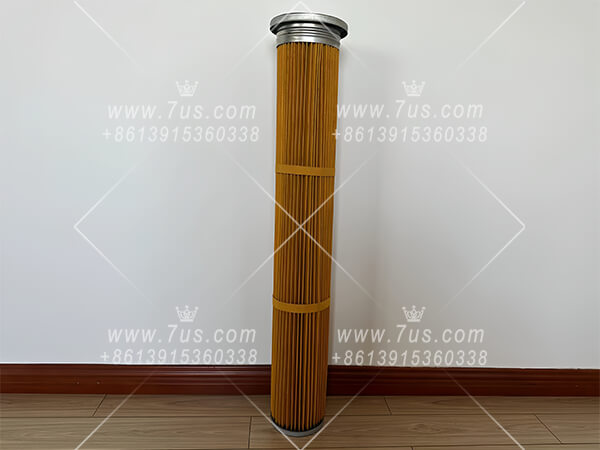

 Cartridge Dust Collector Filters and Accessories
 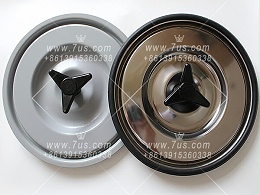 Cartridge Filter Access Cover